
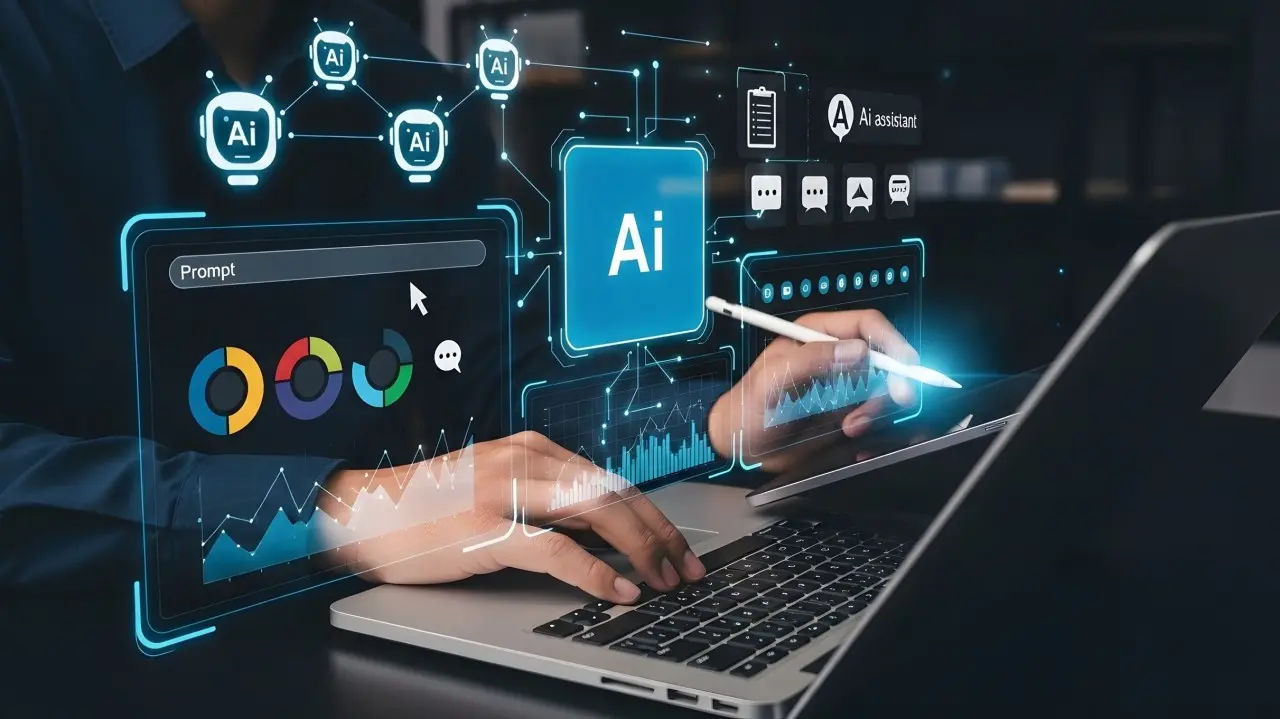
As the digital era progresses, technology plays an ever-more-important part in our lives. E-commerce is one area where technology has had a significant impact. Due to the growth of online purchasing, businesses are always looking for fresh and creative methods to connect with consumers and differentiate themselves in a market that is continuously expanding. AI (AI) can help with it. AI-generated content has the ability to completely transform the e-commerce sector by giving businesses individualized and captivating material that can boost revenue, client happiness, and brand loyalty. We’ll look at how AI-generated content is altering e-commerce and what it means for online buying in the future in this post.
Although the content can improve the website, it won’t happen until the fundamentals of SEO are also addressed. This covers on-page SEO, link development, and technological SEO.
What is AI-generated content, and how does it work in e-commerce?
Any kind of digital content produced with AI methods is referred to as AI-generated content. AI-generated content in e-commerce can take many different forms, such as email marketing campaigns, personalized suggestions, and product descriptions and reviews.
Large volumes of data, including product details and user activity, are usually fed into an AI algorithm in order to produce AI-generated content for e-commerce. After that, the algorithm analyzes the data using machine learning techniques to produce content that is customized to each customer’s requirements and tastes.
AI-generated content, for instance, may be used by an online retailer to produce product descriptions tailored to certain buyer demographics. To appeal to various customer groups, this may entail employing diverse language, imagery, and even product characteristics.
Personalized suggestions that are based on each customer’s unique interests and past purchases can also be powered by AI-generated content. Customers are more inclined to buy things that are related to their interests, which can boost customer engagement and boost sales.
Overall, AI-generated content is a powerful tool for e-commerce companies looking to improve customer engagement, increase sales, and stand out in an increasingly crowded marketplace. As AI technology continues to advance, we can expect to see even more innovative uses of AI-generated content in e-commerce in the years to come.
Advantages of AI-generated content in e-commerce
The capacity to tailor content to each customer’s needs and tastes is one of the many benefits of adopting AI-generated content in e-commerce. AI algorithms can create material that is customized to each customer’s unique preferences by examining data on product details and consumer behavior. Personalized product recommendations, targeted email campaigns, and even website content tailored to each particular consumer are examples of this.
Because it makes the purchasing experience more relevant and meaningful, personalization is a major factor in increasing customer engagement. Consumers are more inclined to interact with content that relates to their interests, which can strengthen the bond between the consumer and the online retailer.
Increasing the effectiveness of marketing and sales initiatives is another benefit of utilizing AI-generated content in e-commerce. The time and resources needed to produce and disseminate information can be decreased since AI algorithms can produce material far more quickly than human content producers.
Additionally, AI-generated content can enhance the precision and applicability of search results and product suggestions, which can boost sales and consumer happiness. AI algorithms can find patterns and trends that can be utilized to enhance the caliber of product recommendations and search results by examining vast volumes of data on consumer behavior and product details.
In general, AI-generated content has a wide range of benefits for e-commerce. From personalization and customer engagement to increased efficiency and accuracy, AI-generated content is a game-changer for e-commerce companies looking to stay ahead of the competition and provide a better shopping experience for their customers.
How AI-generated content can improve product recommendations and search results?
Enhancing search results and product recommendations is one of the main advantages of utilizing AI-generated content in e-commerce. AI systems can find patterns and trends that can be utilized to produce suggestions and search results that are more precise and pertinent by examining vast volumes of data on consumer behavior and product details.
AI algorithms, for instance, can examine consumer browsing and purchasing data to find products that customers frequently buy together or that they frequently view together. Sales and customer satisfaction may rise as a result of using this data to produce more precise and pertinent product recommendations.
In a similar vein, AI systems can find the most pertinent keywords and phrases for a particular product by analyzing product descriptions and other material. Customers will find it easier to locate the products they want when search results are optimized using this information.
Additionally, AI-generated content can enhance the precision of product categories and classifications, facilitating users’ navigation of e-commerce websites and their search for desired products. AI algorithms may determine the best categories for each product by examining data on customer behavior and product qualities. This ensures that the products are positioned in the proper area of the website and facilitates customer discovery.
Overall, the ability of AI-generated content to improve product recommendations and search results is a key advantage of this technology for e-commerce companies. By providing customers with more accurate and relevant recommendations and search results, companies can increase sales, improve customer satisfaction, and build stronger relationships with their customers.
Case studies of companies using AI-generated content in e-commerce
There are many companies that have successfully implemented AI-generated content in e-commerce and have seen significant improvements in their marketing and sales efforts as a result. Here are a few examples of companies that have successfully leveraged AI-generated content:
- Alibaba: Alibaba, the Chinese e-commerce giant, has implemented a range of AI-powered features, including personalized product recommendations, personalized search results, and even personalized web pages. As a result, the company has seen a significant increase in user engagement and sales, with personalized product recommendations accounting for 75% of all its product clicks.
- Amazon: Amazon is another company that has successfully implemented AI-generated content to improve its product recommendations and search results. By analyzing customer data and product information, Amazon’s AI algorithms are able to generate personalized product recommendations and optimize search results. This has helped the company to increase sales and improve customer satisfaction, with personalized recommendations accounting for up to 35% of Amazon’s sales.
- The North Face: The North Face, a well-known outdoor clothing brand, has used AI-generated content to create personalized email campaigns that are tailored to the interests and preferences of individual customers. By analyzing customer data and product information, the company’s AI algorithms are able to generate personalized content that is more relevant and engaging for each customer. As a result, the company has seen a significant increase in customer engagement and email open rates.
- Sephora: Sephora, the popular beauty retailer, has used AI-generated content to create personalized product recommendations and search results. By analyzing customer data and product information, Sephora’s AI algorithms are able to generate personalized recommendations that are tailored to each customer’s interests and purchasing history. This has helped the company to increase sales and improve customer satisfaction, with personalized recommendations accounting for up to 50% of the company’s sales.
Overall, these case studies demonstrate the power of AI-generated content in e-commerce and how it can be used to improve customer engagement, increase sales, and provide a more personalized shopping experience. As AI technology continues to advance, we can expect to see even more innovative uses of AI-generated content in e-commerce in the years to come.
